
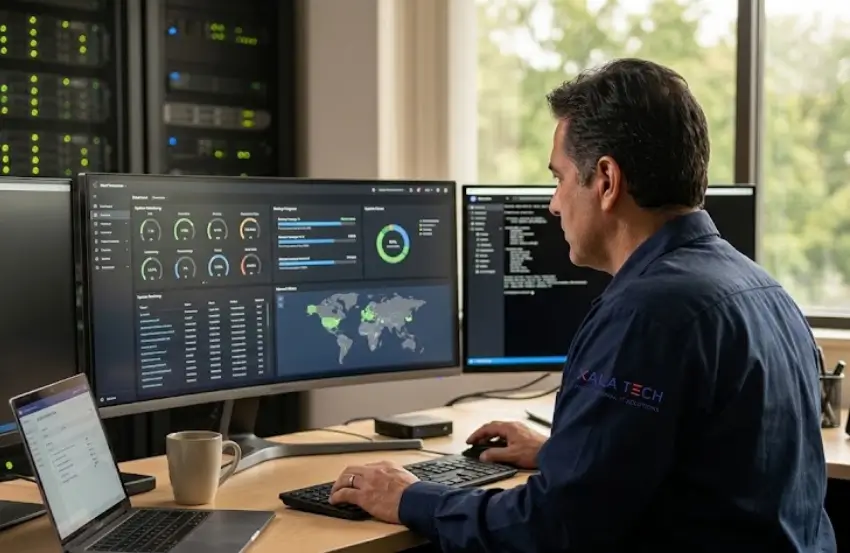
Business continuity is the process of preparing a company to keep operating when unexpected events disrupt normal business activities. For organizations in Bethesda, Maryland, Business Continuity Bethesda MD planning can address technology failures, cyberattacks, power outages, severe weather, hardware problems, data loss, and other disruptions that could stop employees from working. A business continuity plan goes beyond simply backing up files. It identifies critical operations, determines what resources those operations require, and establishes practical procedures for restoring them after an incident. For a Bethesda business, this may include protecting Microsoft 365 data, maintaining reliable backups, preparing alternative communication methods, securing remote access, and establishing recovery priorities. The same planning is useful for nearby teams looking for network security and backup discipline in Chevy Chase.
Business continuity also works closely with disaster recovery. Disaster recovery generally focuses on restoring IT systems and data, while business continuity takes a broader view of keeping the organization functioning. For example, if a server becomes unavailable, disaster recovery addresses system restoration while a continuity plan helps employees continue serving customers while recovery is underway. For small and midsize businesses, professional planning can make this process more manageable. Xala Tech Services helps businesses evaluate technology risks and develop practical IT strategies designed to reduce downtime and improve resilience. The goal is not merely to recover after something goes wrong, but to prepare the business to respond quickly and continue operating.
Why Business Continuity Matters in Bethesda, MD
Bethesda businesses depend heavily on technology for communication, customer service, financial operations, cloud applications, and internal collaboration. Even a relatively short technology outage can create lost productivity and frustrated customers. Consider a Bethesda professional-services firm that suddenly loses access to its files because of ransomware. Employees cannot access important documents, email attachments, or client information. Without tested backups and a documented recovery strategy, management may spend hours or days determining what happened and how to restore operations.
A continuity strategy provides a defined response. The company understands which systems are most important, identifies who is responsible for each recovery decision, determines how to access backups, and guides employees on how to continue working during the disruption. This is particularly important for businesses operating across Bethesda, Washington, DC, Northern Virginia, and Maryland, where employees may work from multiple offices or remotely.
What Should a Business Continuity Plan Include?
Risk Assessment and Business Impact Analysis
A strong plan starts by identifying potential risks and determining which business functions are most critical. A business impact analysis can help establish how long each system can remain unavailable before the disruption causes serious financial or operational consequences.
For example, an accounting firm may prioritize financial applications and client documents, while a medical-related organization may place greater emphasis on secure access to essential records and communication systems.
Data Backup and Disaster Recovery
Reliable backups are one of the foundations of continuity planning. Businesses should consider backup frequency, retention, security, recovery time, and where backup copies are stored. Simply having a backup does not guarantee successful recovery. Backups should be monitored and periodically tested to verify that important data can actually be restored.
For Bethesda organizations, combining data backup Bethesda MD solutions with a broader disaster recovery strategy can help reduce the impact of accidental deletion, hardware failure, ransomware, or other data-loss events.
Cybersecurity and Access Controls
Cybersecurity is another important part of business resilience. A continuity plan should account for incidents such as compromised accounts, malware, phishing attacks, and unauthorized access. Multi-factor authentication, endpoint protection, security monitoring, employee awareness training, strong password policies, and properly managed permissions can reduce the likelihood and impact of an incident.
If an account is compromised, the response plan should also explain how the team will disable access, isolate affected devices, change credentials, and review critical systems.

Business Continuity, Compliance, and Security
Certain organizations may have regulatory, contractual, or industry-specific requirements affecting how information is protected and recovered. Businesses should understand which obligations apply to their operations before creating or updating their continuity strategy. A continuity plan should therefore consider not only availability but also confidentiality and data integrity. Restoring information quickly is not enough if sensitive business or customer data has been exposed.
Organizations handling sensitive information may benefit from working with experienced cybersecurity Bethesda MD and IT professionals who can evaluate security controls alongside continuity requirements.
How Much Does Business Continuity Planning Cost?
The cost varies according to company size, number of employees, technology environment, security requirements, backup volume, recovery objectives, and the complexity of the business. A small company using cloud applications may require a relatively straightforward continuity strategy. A larger organization with multiple offices, specialized applications, on-premises infrastructure, or strict recovery requirements may need more extensive planning.
Rather than choosing a solution based solely on price, businesses should compare the cost of preparation with the potential cost of prolonged downtime. Lost employee productivity, missed deadlines, interrupted sales, customer dissatisfaction, emergency technical work, and reputational damage can quickly exceed the cost of preventive planning. The right approach is to establish realistic recovery objectives and invest in the controls that protect the company’s most important operations.
A Practical Example for a Bethesda Business
Imagine a 30-person consulting company in Bethesda that relies on cloud applications, laptops, email, shared files, and several specialized business systems. A continuity strategy might identify email, client files, authentication, internet access, and core business applications as high-priority resources. The company could then establish secure backups, MFA, endpoint security, documented recovery procedures, alternative communication methods, and assigned responsibilities for an incident.
If a ransomware event affects several employee computers, the company has a defined process rather than improvising under pressure. We can isolate compromised devices, secure affected accounts, restore clean systems, and redirect employees to approved alternative workflows while we continue recovery. That preparation can significantly improve the company’s ability to maintain customer service and reduce operational disruption.
How Xala Tech Services Can Help
Treat business continuity as an ongoing process rather than a document that someone creates once and forgets. Technology changes, employees join and leave, applications get replaced, and new cybersecurity threats emerge.
Xala Tech Services can help businesses evaluate their IT environment, identify potential weaknesses, strengthen backup and recovery practices, and develop technology strategies that support business continuity. For organizations in Bethesda and surrounding areas of Maryland, Virginia, and Washington, DC, this approach can provide a more practical path toward reducing downtime and protecting critical operations.
The most effective continuity strategy is one that reflects how the business actually operates. By identifying critical systems, protecting important data, preparing for cybersecurity incidents, and regularly testing recovery procedures, businesses can become more resilient when unexpected disruptions occur.